


My literary tastes have evolved remarkably over the years. As a child, I was captivated by the mysteries of Nancy Drew, which then transitioned to the intriguing worlds of Agatha Christie, Sidney Sheldon, and John Grisham. However, as I delved into the rich tapestries of Sanskrit and Tamil literatures, my affections shifted towards the poems, novels, and epics penned in these exquisite languages. Recently, inspired by the release of its Tamil movie adaptation, I revisited ‘Ponniyin Selvan,’ a novel that holds a special place in my heart. Presently, I find myself drawn repeatedly to ‘Shaakuntalam’ by Mahakavi Kalidasa, a masterpiece written in Sanskrit, which I am reading again for the umpteenth time.
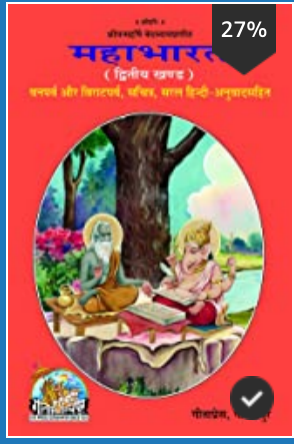
Whenever opportunity permits, I immerse myself in the Mahabharata, especially drawn to its captivating tales. However, in my journey through this epic, I find myself seeking out insightful explanations not just to grasp the narrative’s structure but also to enrich my understanding of both the language and the history intertwined within.
There’s a profound adage regarding the Mahabharata, encapsulated by the Sanskrit phrase: यदिहास्ति तदन्यत्र यन्नेहास्ति न तत् क्वचित्. This translates to the idea that what is found within the Mahabharata can be found elsewhere, but what is absent from this epic cannot be discovered anywhere in the world. Such a statement underscores the unparalleled significance of the Mahabharata, positioning it not just as a monumental work of literature, but as a comprehensive guide for navigating the complexities of life. Is it any wonder that it is considered as the fifth Veda?

 arabhati's arbhatyam :)
Leave a comment