
I had a perfectly disciplined plan—tomorrow was reserved for a neat little hal-sandhi post. Everything was set, scheduled, and Sanskrit was behaving itself. And then… plot twist.
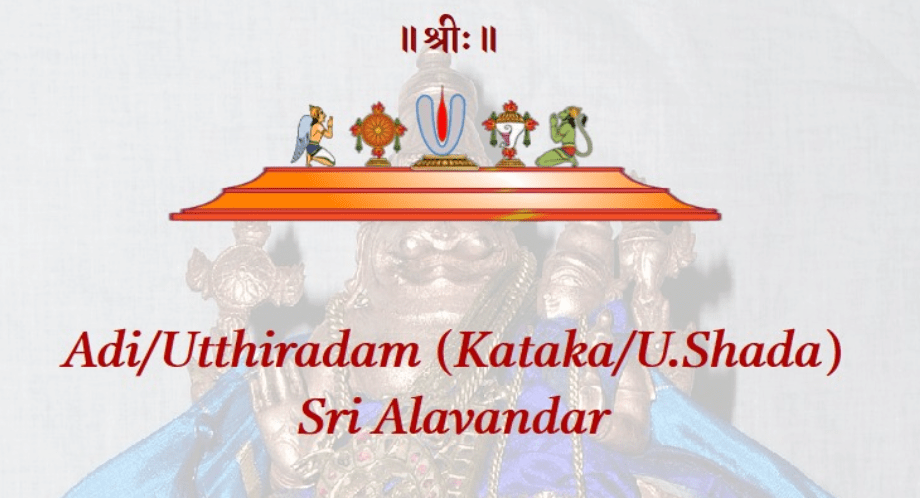
Today is Śrī Āḷavandār’s Tirunakṣatram.
One recitation of that breathtaking padyam by Swami Deśika later, and my entire content calendar respectfully surrendered. Priorities have shifted, hal-sandhi has been politely benched, and bhakti has taken the driver’s seat.
So brace yourselves, makkale! We’re diving into one of Swami Deśika’s most brilliant examples of layered wordplay—where every syllable sparkles, every compound hides a deeper meaning, and devotion and poetry become inseparable.
विगाहे यामुनं तीर्थं साधुबृन्दावने स्थितम्। निरस्तजिह्मगस्पर्शे यत्र कृष्णः कृतादरः।।८।। ~ यतिराजसप्ततिः
There are two layers of meaning in this verse. The surface meaning refers to Lord Kṛṣṇa and the sacred river Yamunā, while the inner meaning celebrates Śrī Yāmunācārya (Ālavandār). Let us first consider the meaning relating to Lord Kṛṣṇa.
अन्वयः -> (अहं) यामुनं तीर्थं साधुबृन्दावने स्थितं विगाहे, यत्र निरस्तजिह्मगस्पर्शे कृष्णः कृतादरः।
This may be translated as: I immerse myself in the sacred waters of the Yamunā, flowing by the holy grove of Vṛndāvana, where Lord Kṛṣṇa, having rid it of the touch of the crooked serpent Kāliya, bestowed His grace and loving regard upon it.
Here, यामुनं तीर्थम् refers to the sacred river Yamunā, and साधुबृन्दावने स्थितम् describes it as flowing through the sanctified land of Vṛndāvana, the abode of saints and devotees. The expression निरस्तजिह्मगस्पर्शे recalls the celebrated episode of Kāliya, the crooked serpent whose poisonous presence had defiled the Yamunā. After subduing and banishing Kāliya, Lord Kṛṣṇa restored the river to its pristine purity. Thus, कृष्णः कृतादरः signifies that Kṛṣṇa, having purified the Yamunā, bestowed His special grace and affection upon her, making her forever sacred to His devotees.
Meaning 2 (Applied to Ālavandār)-
“I immerse myself in (i.e., take refuge in and deeply follow) the sacred teacher Yāmunacharya (Ālavandār), who is firmly established for the protection of the community of noble devotees. He is entirely free from the association of the crooked and the wicked, and upon him Lord Kṛṣṇa bestowed His special grace and affection.”
Here, the verb विगाहे conveys not merely physical immersion but also the sense of entering deeply into the teachings, taking refuge in, and wholeheartedly practising the preceptor’s doctrine.
The expression निरस्तजिह्मगस्पर्शः signifies one who is completely untouched by the influence or association of deceitful and wicked people. Consequently, he remains an ideal guardian of the righteous.
The phrase कृष्णः कृतादरः alludes to the celebrated yogic episode in the life of Ālavandār. If you do not know the episode, make an effort to know that!
…and that, makkale, is the kind of post that leaves the heart deeply satisfied. My hope is that the next time you recite this padya, you won’t merely chant the words—you’ll savour every layer of meaning hidden within them, and the recitation itself will become even more joyful and meaningful.
यामुनाय नमोनमः।


Leave a Reply